
Outside of CORSA, Hagerty may be doing more work to promote the Corvair than all other publications combined. If you are looking for insurance for your Corvair or other classic car, or just enjoy reading about the classic car hobby, you can’t go wrong with Hagerty.
Many thanks to member Bruce Mooers for sending this article to share and to Eddy Eckart who wrote it. Photos by Rich Chenet. The original article can be found HERE.
Warren Dernoshek didn’t set out to work at what would become one of the most famous Chevy dealerships in the country. Back in 1966, Don Yenko hadn’t begun to create his now-legendary big-block Camaros, Chevelles, and Novas, an effort that started at his dealership and leveraged GM’s Central Office Processing Order (COPO) program. For Dernoshek, a young hot-rodder from western Pennsylvania, Yenko’s Chevy dealership in nearby Canonsburg was simply a steady place to turn a wrench and take home a paycheck.
“When I got out of high school, I was living the dream,” he says, a soft smile peeking from beneath his white mustache. “I was on my way to California for fame and fortune, so to speak, a friend of mine and I.” After getting sidetracked in the oilfields of Texas and Kansas, and discovering California wasn’t for him, Dernoshek made his way home to Pennsylvania. A buddy of his, George Furda, worked at Yenko Chevrolet as second-in-command of its fledgling performance shop, and he brought Dernoshek into the fold.

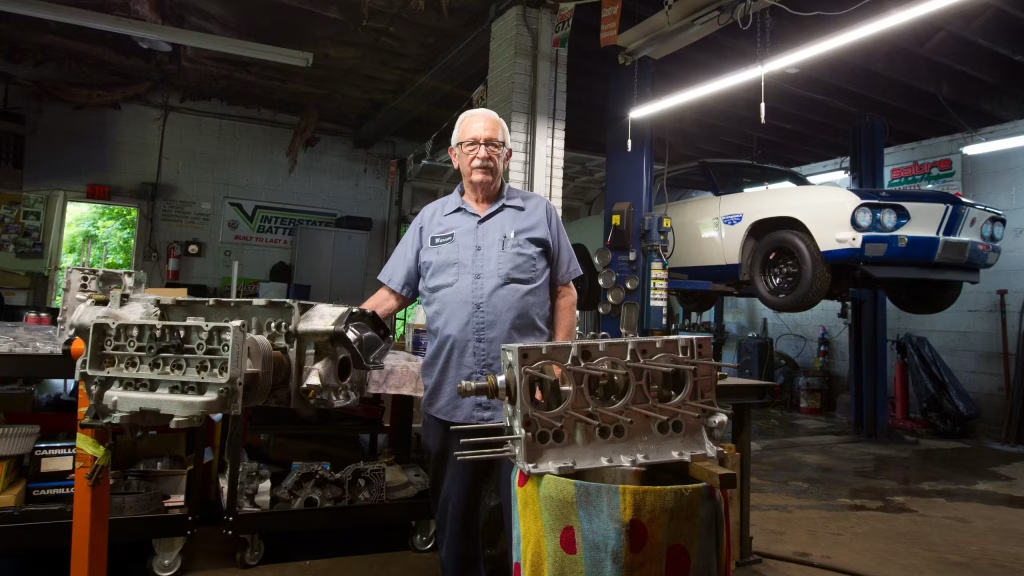
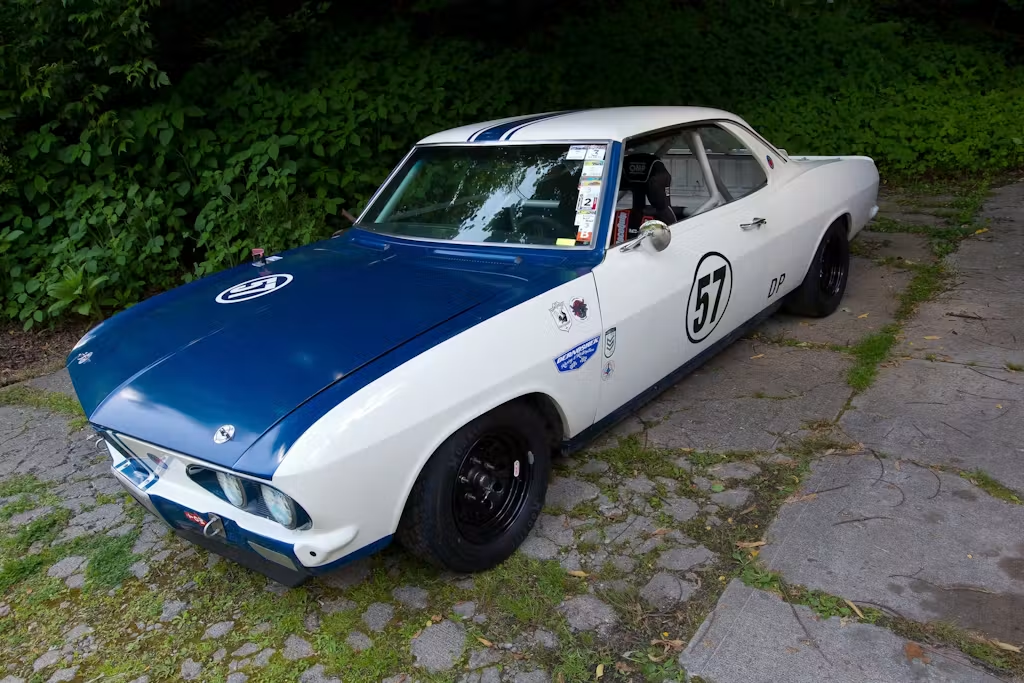
Dernoshek wound up working at Yenko for nearly 20 years, converting cars to Yenko spec, serving as a mechanic on the racing crew, and eventually managing the parts and service departments of Yenko’s Saab dealership. Today, he works out of a brick-and-block garage that could not be more unassuming. Tucked behind a small office building and nestled between a patch of woods and a steep northwest Pennsylvania hillside, the shop in McMurray houses Yenko Stinger number 057, carts filled with air-cooled Chevy parts, and the memories of a man who helped build the cars that kicked off a ’60s performance legend. I visited his shop, curious to hear what Yenko was like from the inside.
By the time he was hired on at Yenko’s dealership, Dernoshek knew plenty about going fast in a straight line. As a car guy and a self-described “typical hot rodder of the day,” he had a ’40 Ford that he street raced. The Yenko team opened his eyes to an entirely different world.
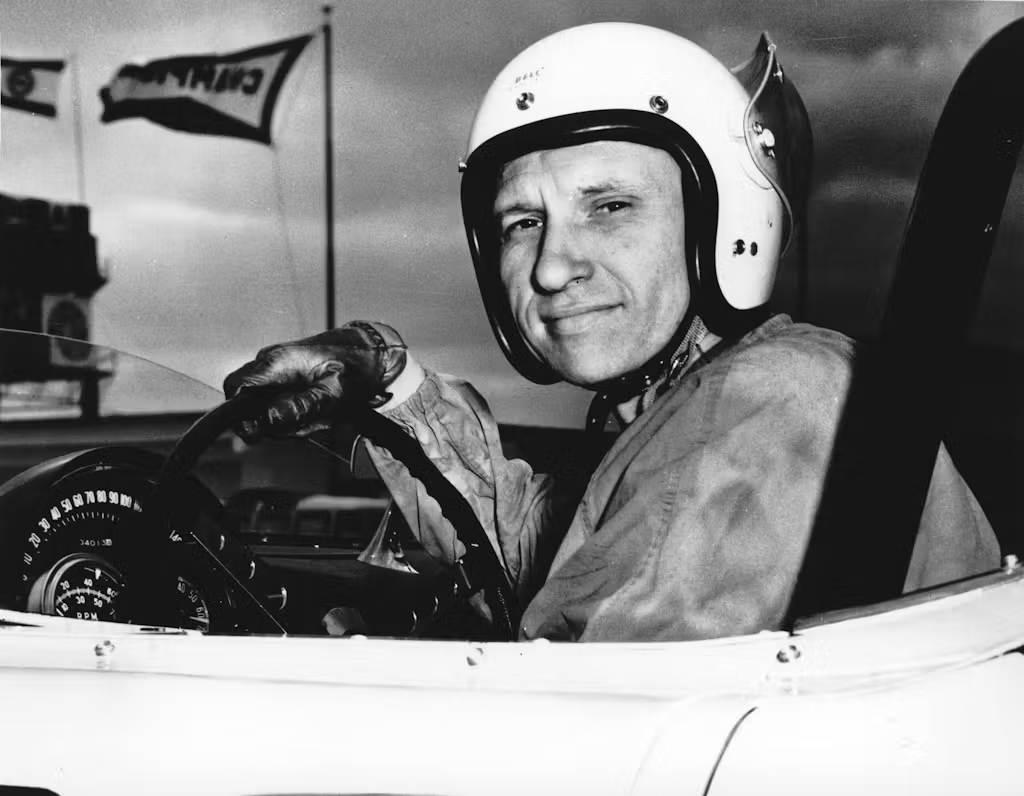
Born in Western Pennsylvania to Slovenian parents, and an avid pilot, Don Yenko had been racing Corvettes on road courses since 1957 and had brought home national championships in the Sports Car Club of America (SCCA)’s B Production class in ’62 and ’63 behind the wheel of his ’57 Corvette.
“I can’t say enough about him,” says Dernoshek. “[Don] was a real special guy; he was a renaissance man. We’re still talking about him 60 years later … You talk about being a success; we’d all like to be thought of that way.”
Don was a talented driver who took over a family dealership, but driving a race car and running a business weren’t his only gifts. He also knew how to harness the right people to execute his vision. “He didn’t want to be all things when it came to the cars,” says Dernoshek. “[Don] was on another level of management as far as creating the whole effort…He didn’t want to have the complete operation and all the problems that went along with it and the people and the expense of the machinery and everything else involved. He was real good at finding good people.”
It didn’t hurt that Yenko was a savvy dealmaker. “He made it happen—it was his character, his drive,” says Dernoshek. “His compassion for sports-car racing blended with the fact that he had all kinds of connections with General Motors. He was on a first-name basis with all the executive force. They probably figured him to be a pain in the butt because he used to fly up to Michigan just for a meeting on the drop of a hat.”
In 1966, Dernoshek found himself in this mix of high-energy leadership and the right bunch of workers. The first project he’d hop on would be part of an effort to win in the SCCA with a different formula—not with a burly ‘Vette, but with an air-cooled six-cylinder mounted in the “wrong” end of a car.
In 1965, the year before Dernoshek was hired at Yenko Chevy, Don hatched the idea of taking the rear-engined Corvair racing in the SCCA’s D-Production class. After tinkering with a 1965 Corvair Corsa and seeing its potential, Yenko ordered 100 Ermine White examples (there ended up being a few more prototypes in this first run, as well) to convert them to Stingers for SCCA homologation for the 1966 season. They arrived in December. By January, Yenko met the SCCA’s requirements to allow his Stinger to race.
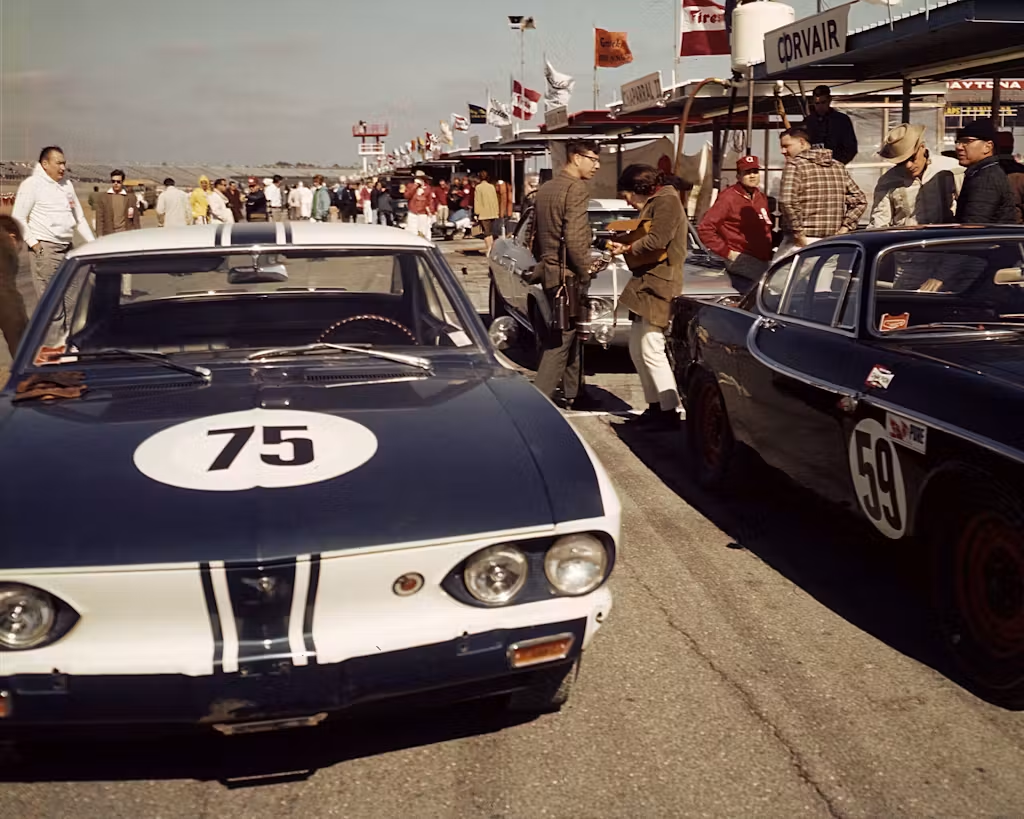
The Stinger was competitive right out of the box, especially in the hands of Jerry Thompson, a racer and engineer who had helped develop the car. “Yenko, being the smart guy he was, had tapped the resources of RST Engineering,” recounts Dernoshek. Thompson and a couple of other GM engineers had created RST as a side gig. “They were the right guys, and they had been playing around with Corvairs for a few years. They did most, if not just about all, the R&D that went into the Stinger that Yenko had given to them.” A year after the car’s introduction, in 1967, Thompson captured the D-Production championship.
Meanwhile, the folks at Yenko Sportscars had their hands full Stinger-izing the Corvairs. “It was an intense deal because the building wasn’t set up for any mass production of anything,” says Dernoshek. “You see pictures of the Cobra and Mustang shop in California that they had going at the same time”—he’s referencing Carroll Shelby’s facility—”and there’s a whole lot of cars and all this space and organization. That was absolutely not the case here. [At Yenko,] it was one segment of the building. You could get like three cars in it. You could jam maybe four, but you couldn’t really work on ’em. There was just a whole lot going on at the time.”
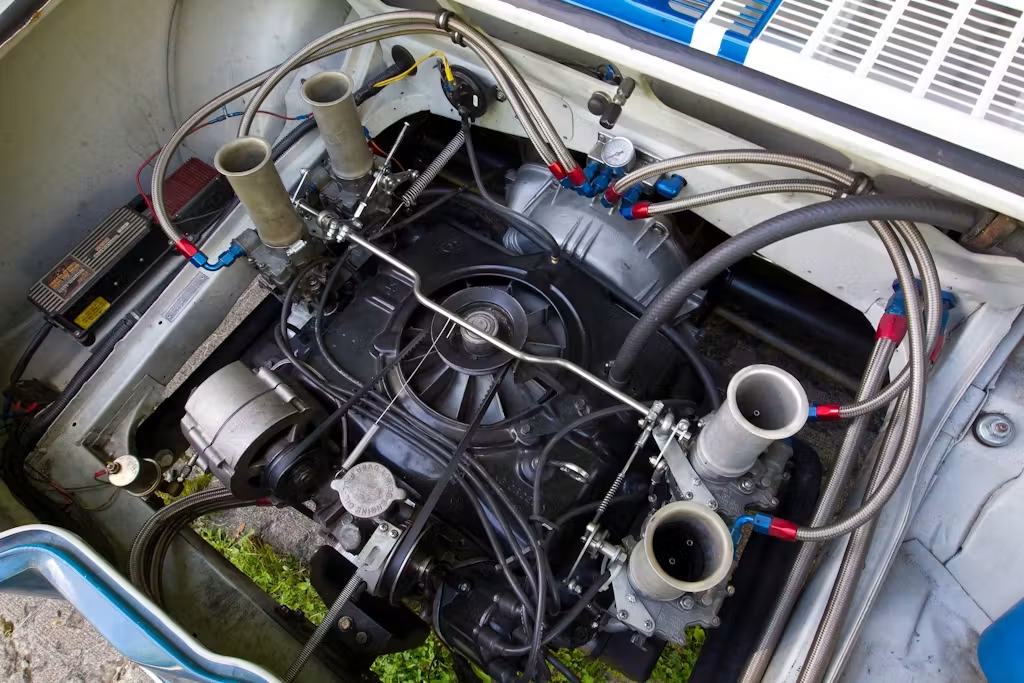
The 140-horse Corvair Corsas that rolled into Yenko’s cramped space that first year left in one of four stages of Stinger. All had their rear seats deleted to clear the SCCA hurdle that required “sports cars” to only have two seats, and all received fiberglass sail panels on the rear pillars along with a fiberglass deck lid with adjustable scoops. For ’66, the cars got blue stripes over the Ermine White base, work that was mostly farmed out, given the small size of the Yenko body shop at the time. Dernoshek shares that they were able to add Koni shocks to the cars, but per SCCA rules, the springs and sway bars had to have a GM part number. (Given the stringent requirements of the sanctioning body, Yenko ensured the 100-car COPO order included factory options like a limited-slip differential, faster steering rack, and dual-circuit brake system.) The Yenko team was able to add a dollop of power, however.
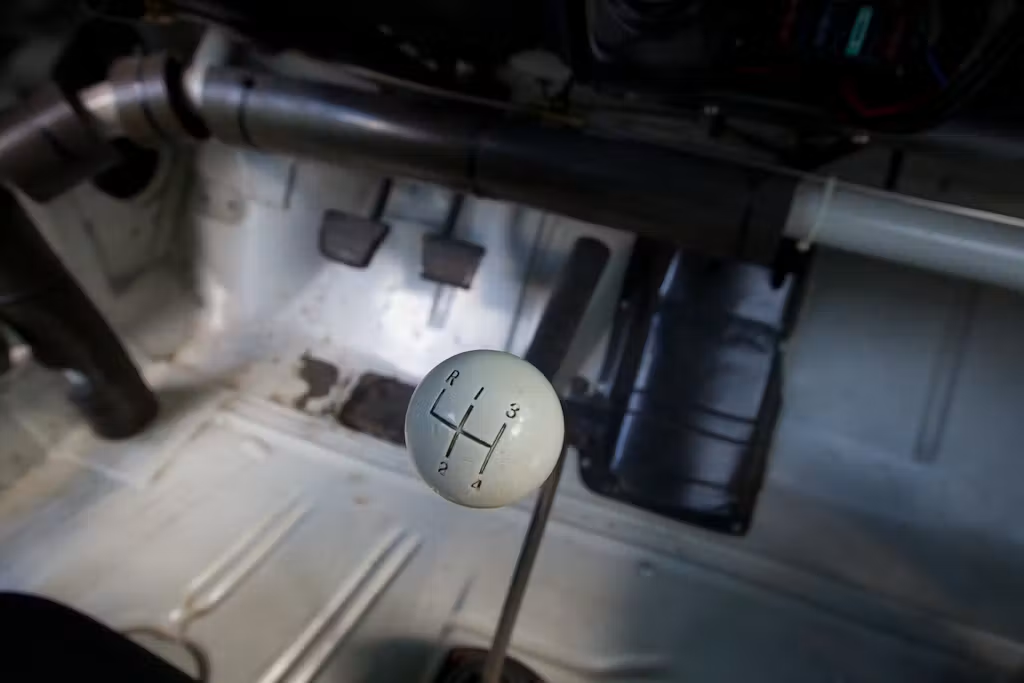
Stage I’s performance tweaks involved improving the oiling system, tweaking the carbs, adding exhaust headers and stronger engine bearings, along with more subtle add-ons like a fan-belt tensioner. This step added 20 horsepower. Things got more serious after that. “Stage I was mainly cosmetic stuff, but for stages two and three, the engine came out, and it was totally disassembled—camshaft changed, compression ratio raised,” says Dernoshek. A subcontractor handled all the necessary machining, and then the engines were reassembled in-house and reinstalled by the Yenko team. Stage II yielded 190 horsepower, and Stage III upped the ante to 220 with more compression and cylinders bored .040 over. The full-tilt Stage IV cars were stronger still, with another 20 horsepower, and were stripped down for competition use.
All the work happened under the watchful eye of Bill Hartley. A long-time employee of Yenko, and Don’s chief race mechanic from the very beginning, Hartley ran a tight ship. Dernoshek describes him, with obvious admiration, as “an absolute hard-ass.” He adds: “One of his sayings was—well, he had a lot of sayings, but one of them was, ‘I’m not always right, but I’m never wrong.’ That pretty much explains Hartley. We ended up being real close in later years. If I had a mentor, it would have been him.”
Hartley stayed extremely busy tuning cars, managing production, and working at the track. Before long, he enlisted Dernoshek as part of the race crew, too. “I’d never been around sports car racing before—it wasn’t my thing,” says Dernoshek. “I was just kind of an average guy, and the sports car element’s a whole different deal. That’s high and mighty. And I was not high or mighty.”
Modest though Dernoshek is, Hartley must’ve seen something in him, because Dernoshek soon found himself part of the team that tended to the Sunray DX Corvette race cars, among which was the first L88-powered Corvette ever built. “That was the most significant deal I was involved with. It was really well-funded, with everything you needed to go racing and be a winner,” he says. Indeed, the Yenko Sunray Corvettes took a class win at the 12 Hours of Sebring in ’67, and a first, fourth, and fifth in class at the 24 Hours of Daytona in ’68.
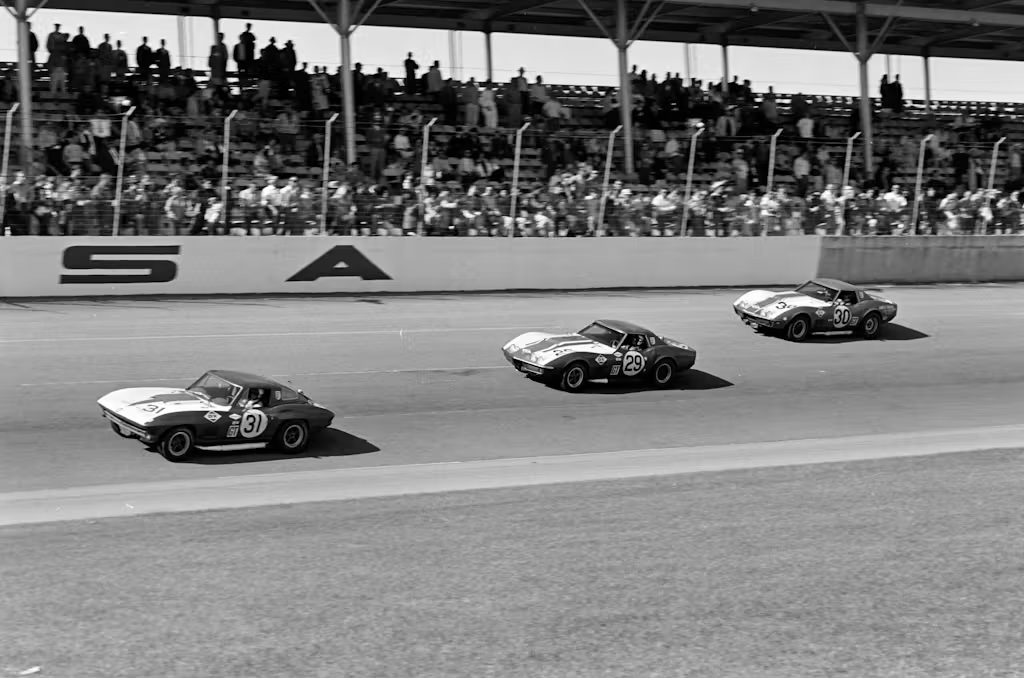
It was only Hartley, Dernoshek, and George Furda as the official mechanics, along with a small cadre of volunteers and friends, who worked on the cars and helped out during those long hours at the track. “Back then there were very few American teams in FIA-sanctioned events,” shares Dernoshek. “To be as successful as we were, being an American entity in international racing, that was a lot to brag about.” The team continued to find success outside of their relationship with Sunray DX, which ended in 1968, notching a win in the Citrus 250 at Daytona in ’68 and class wins at the 6 Hours of Watkins Glen in 1970 and again at Daytona in 1971 before winding down its involvement in racing in the early ’70s.
Having been part of an intimate group in the performance shop, Dernoshek is also well-versed in the big-block Camaros and Chevelles and Novas that made Yenko famous outside of sports-car circles, and his expertise is widely cited in the Yenko community. He stayed on with Yenko for about 20 years before starting his own shop. It seems, though, that the Stingers and his time with the racing side of the business etched him deepest.
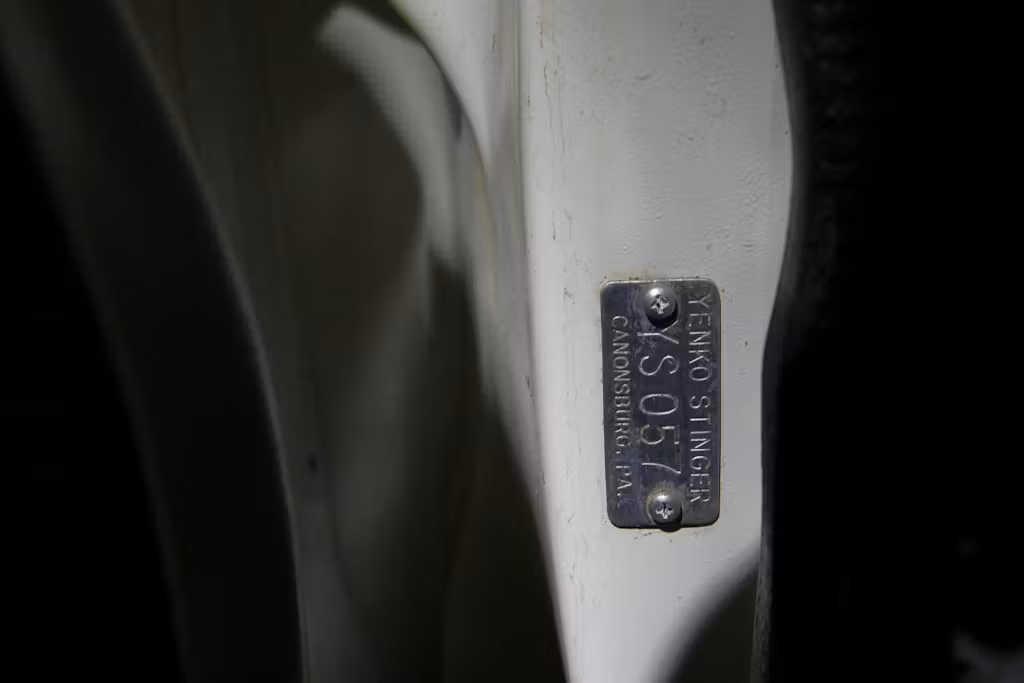
Though he was not initially a sports car person, the Stinger has managed to maintain a place in Dernoshek’s heart. The bay next to his desk houses Stinger 057, which Dernoshek built to Stage Four spec in his shop, and is “about as close as you’ll get to period-correct.” His son Logan still campaigns it in vintage racing.
Chassis 089, now fully developed into a track-day car, resides at Dernoshek’s home. “It has a story of its own,” he shares. “I’ve had it since 1970, I believe, or ’69. It had gone into demo service, and it blew an engine. Then it sat up behind the shop, and they lost their parking space behind that building next to the dealership. It had to go, so that’s when I picked it up as-is. But it had never come into the shop to be converted—along with quite a few others, I would say.” Today, 089 is well beyond a Stage Four. “It’s a conglomeration of the collection of 50 years’ worth of scrounging,” chuckles Dernoshek.
It doesn’t sound like Dernoshek has ever been much for letting grass grow under his feet; a few Corvair engines in various stages of assembly provide evidence that he’s still at it. His time with Hartley and Furda, and the team’s hardscrabble work ethic, surround him in the form of projects-in-progress and mementos of the success he helped achieve.

When I ask him what it was like to be a part of one of the biggest names in the history of American performance cars, he demurs.
“At the time, it was just the job. I’m not an intellectual—I’m a natural-born grease monkey, I guess. Most of this stuff is in retrospect because you’re just living in the moment, you know what I mean?”
As Dernoshek bids me goodbye and walks back into his shop, among those engines, I get the impression that he’s hopping right back into the moment.
Thanks to Bruce for sending this article to share with you and for the Hagerty team for writing and publishing it. If you have an article of interest, please send to sfbacorsa@gmail.com. Members and subscribers really enjoy the content!
Leave a Reply