
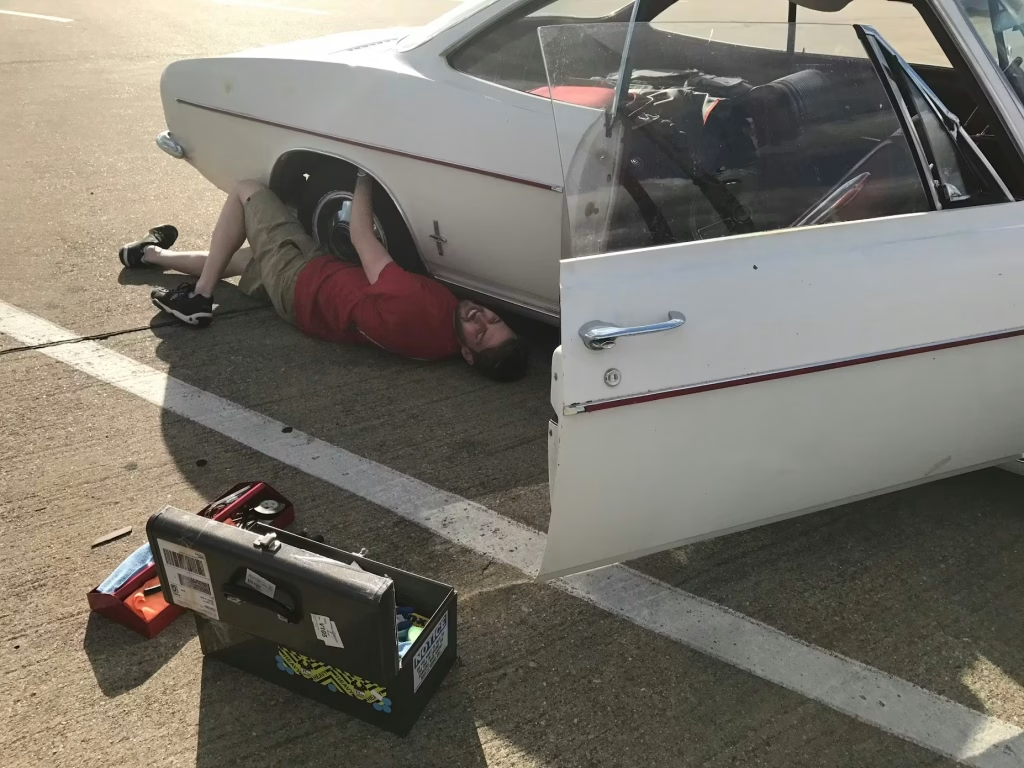
We are big fans of Kyle Smith and of Hagerty! Kyle owns a 66 Corsa and references it frequently in his articles. Hagerty not only insures many of our Corvairs, but their genuine love of the classic car hobby is unmatched. It shows in their digital media, Drivers Club magazines and customer service. If you’re looking for a reputable classic car insurer, consider them.
This helpful article and photos are courtesy of Kyle Smith and Hagerty. The original article can be found here.
Working on cars requires a mountain of knowledge to do safely, effectively, and efficiently. That knowledge doesn’t come instantaneously and cannot all be sourced by simply reading or watching the endless mountains of content in print or on the web. Putting accumulated knowledge into practice creates the invaluable experience that guides many long-time DIY car folks on their projects. It takes time and effort, but practice makes permanent, and bad habits are best broken early.
We’ve all been there. Stuff like “every tool is a hammer” and other jokes made by experienced wrenchers can easily be misinterpreted by a newbie and turned into a bad habit. Mistakes get made with or without help, but by highlighting these six, we hope we can save even just a few people from having to experience them. Trust us, these are easy to get comfortable with, but the results can be costly.
Not Supporting a Car Properly

Lots of the parts of a car either serve to suspend it off the pavement or are tucked underneath in a way that is best accessed by lifting the whole thing up and working while lying beneath it. If you aren’t at least a little scared of getting under a multi-ton chunk of metal, glass, and plastic, then you definitely know how to properly support one. But even then a little fear is healthy.
Lifting and supporting cars properly is critical to not only having a safe time working on a car, but also for not damaging the car itself. A service or owners manual is a great place to start when looking for the proper jacking and support places. Of course, only use appropriately rated and maintained lifting and support devices. Chunks of firewood, your neighbor’s leaky old forklift, or a pile of cinder blocks are often just asking for trouble.
SFBA note: For you new(er) to Corvairs, you can find helpful info HERE about how to properly and safely lift your Corvair.
Leaving Fluids Out
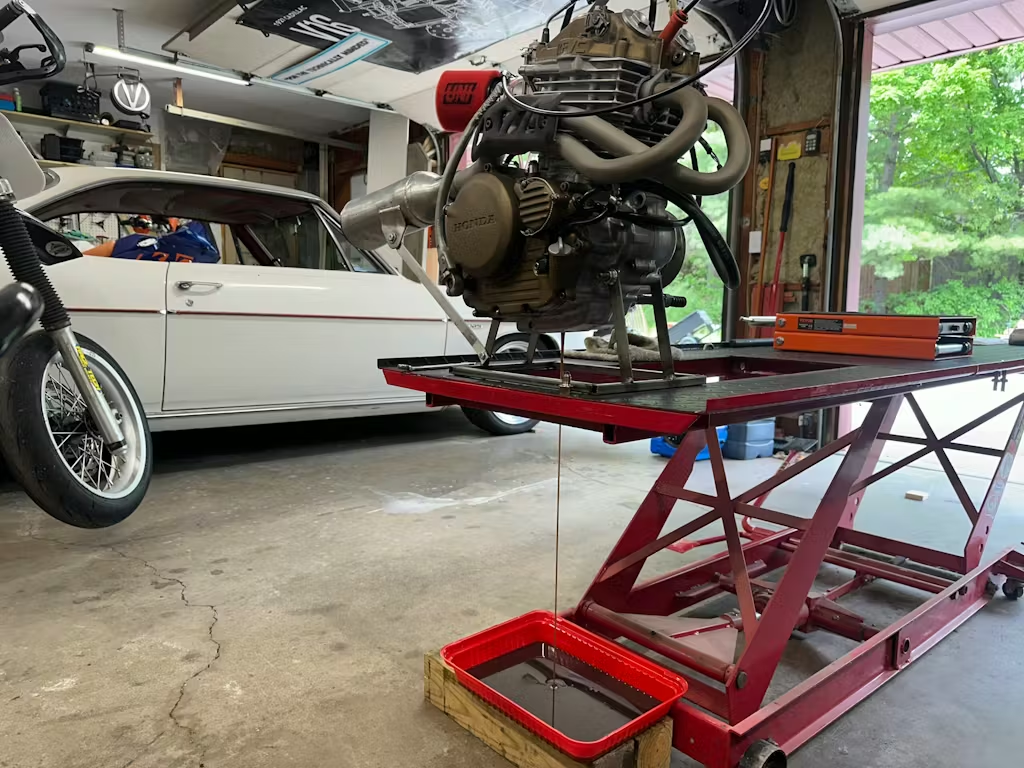
Some of the first projects that many DIY-ers get into involve fluid changes. Draining old gas, brake bleeding and oil changes are the best-known trio for Corvairs. Typically, getting fluids out of cars requires some type of larger drain pan to help limit spills. It’s tempting to leave these drain pans full and sitting on the floor for a time, either while the project sits or until it’s easy to have something to dump the used fluids into. This is a dangerous trap.
A stable, seal-able container prevents an errant spark from lighting an oil fire under your car. That’s not to mention accidentally kicking it and creating a toxic garage slip-and-slide that no one enjoys. Keep fluids stored properly and clean up spills immediately.
Pushing Instead of Pulling

Busted knuckles are a thing that happens. It’s just the nature of using our hands to manipulate hardware in the confined spaces of engine compartments or dashboards. But the abrasions can be prevented with a little mental flip: Stop pushing a tool and start pulling. This allows significantly more feel for the breakaway of most hardware, meaning that there isn’t a sudden rush of force from leaning our whole upper body onto the breaker bar with our arm straight in order to get that motor mount loose.
Of course, we have to work within the space given, and that means you can’t always rotate things the ideal way. In that case, be sure to stop and think for a moment each time you put tool to hardware, especially if things don’t come apart on the first try. It’s easy to get lured into just putting more force on the wrong tool. Sometimes a longer wrench or simple hand adjustment will keep the skin on your hands. And obviously, for the those who are real smart: Gloves exist and can help. It should be said that this is only for wrenches and other non-sharps—cutting away from yourself is still the best bet.
Not Disconnecting the Battery

Countless projects on cars are actually pretty simple and quick. It’s the retrieval of tools, the location and preparation of parts, and the futzing to get a light aimed just right to see what you are you doing that soak up so much time. Even without all that, it’s easy to skip past one simple step when doing some jobs: Disconnecting the battery.
This isn’t just about radio presets or having to try to find where you wrote the multi-digit PIN for the security system that we fear when working on modern cars. It’s about the wrench that quickly becomes a resistance heating element when dropped and grounds between the alternator stud and cylinder head. Mishaps like that happen and can be genuinely dangerous when factoring in rings, watches, or other jewelry. Not intending to be scary here, but it’s wise to at least work with the understanding of what can happen and how easily it is prevented.
Cheaping Out in the Wrong Places
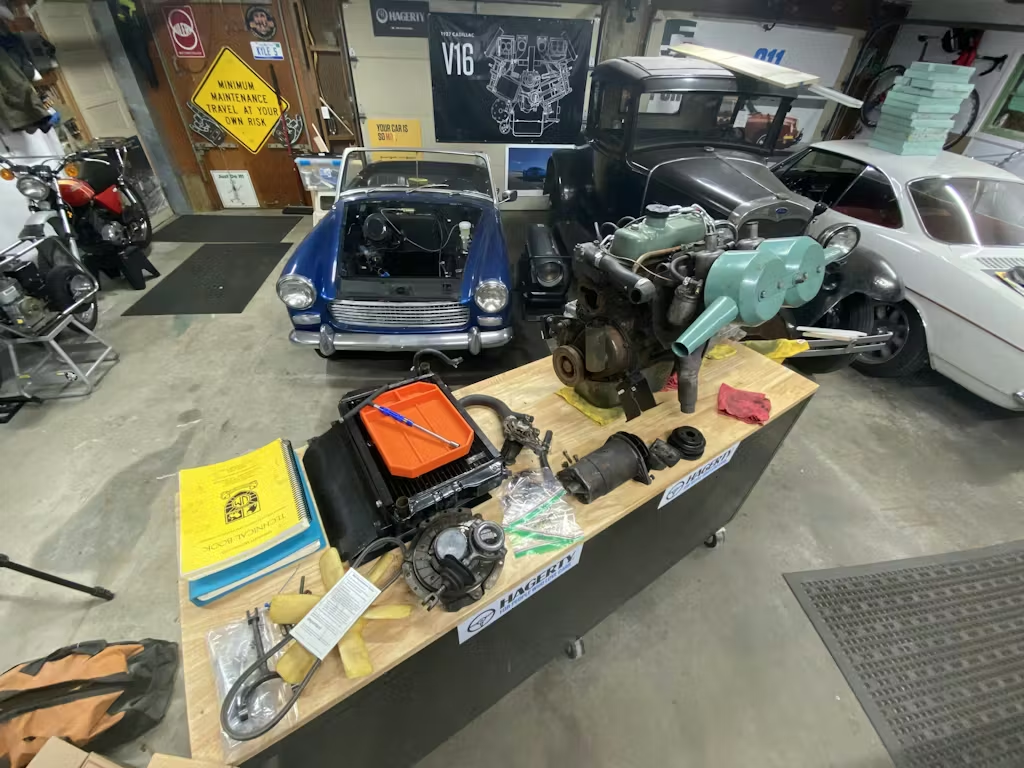
Playing with cars is expensive. Even cheap cars can vacuum up dollars at astonishing rates, especially if your ambition is left alone with a credit card and a computer. So it’s easy to start pinching pennies so hard you hear old Abe give little yell while parts shopping, particularly if those parts aren’t the fun and exciting kind. We aren’t here to shame anyone’s buying habits, but merely to point out that the most affordable part is not always the best or cheapest deal. Same goes for some tools and shop equipment.
Consider this: Buying the cheap part and having to do the job twice costs time, but sometimes the gamble of a few dollars is worth the chance the part will be good. Instead, consider investing a little extra time in researching which parts you are buying and the quality you are getting. This doesn’t always work as neatly as we’d like, but occasionally we have been able to see that the top-tier and mid-tier options are functionally identical, or that the bottom is functional but looks inappropriate. Don’t compromise function to save a few dollars, because that can mean things will end up taking more time or costing more money. The reliability and peace of mind are worth the wait.
Believing “Good Enough” Is Acceptable

The tough thing about working on cars as a hobby is the balance between solving problems without creating new ones. Old cars don’t need help creating issues. Instead, think along the lines that the only work worth doing is the level of work that will not require being re-done.
Yes, at times this is something that has bypasses, like when a job just needs to be done right now rather than done right at an unspecified later date. That is a slippery slope, though, so be careful in letting your guard down regarding the quality of work you do.
We all make mistakes, and some of us even love to tell stories about ours to help others avoid making the same mistakes. We can’t prevent every mishap-turned-learning experience, but little nudges like this might help keep the severity down when they do occur.
Were there any glaring omissions in the article? Have a DIY mistake turned success you’d like to share? Smash that comment button and let us know.
Lastly, remember to use the Corvair Center Forum as a reference if you get stuck on a repair. With the largest archive on the internet, you will likely find the answer you seek to finish the job. Creating an account and using the forum are free and we also have a private SFBA forum on the site.

Leave a Reply