
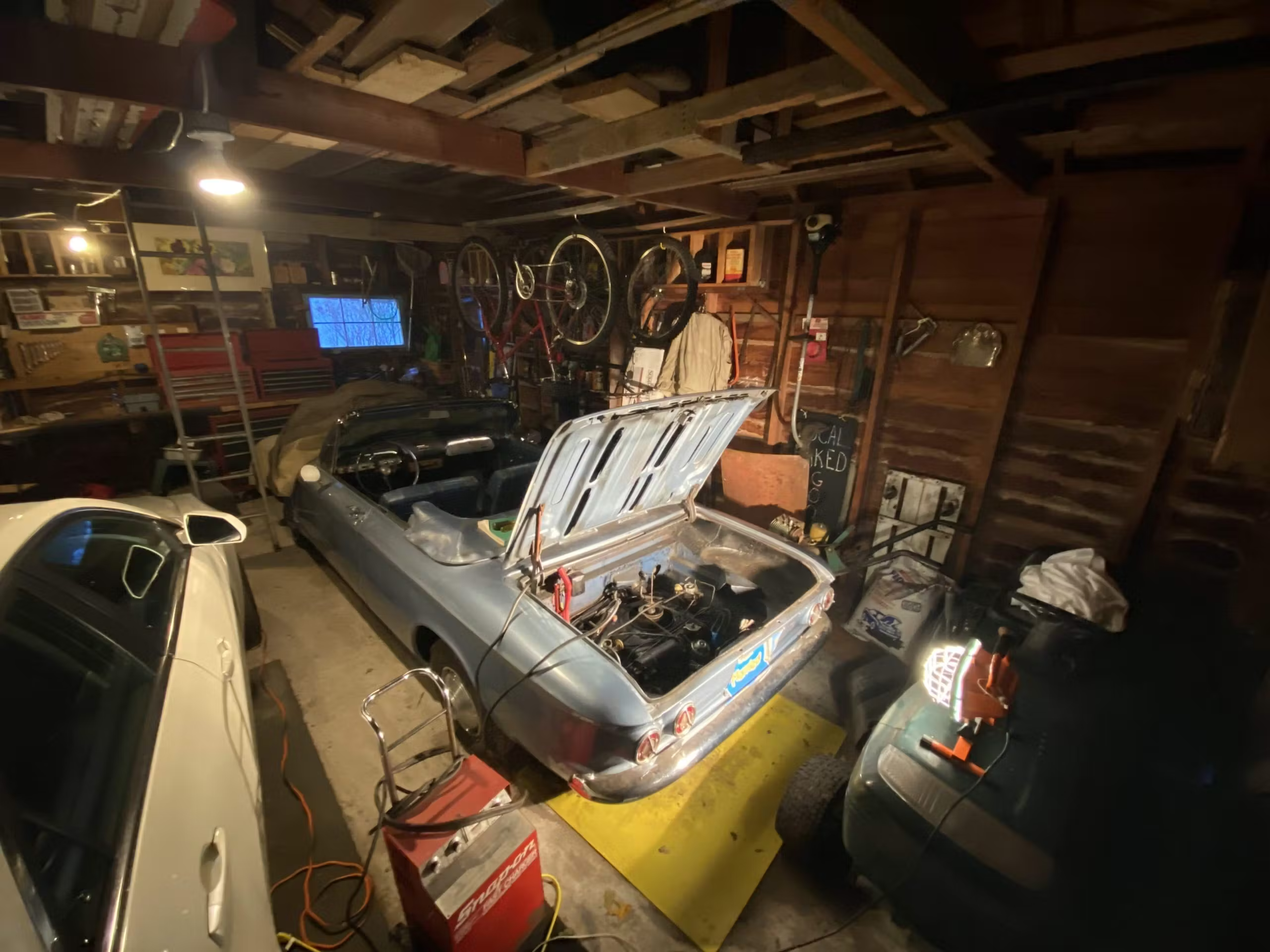
Many of us enjoy reading an article about a classic car being brought back to life after a long rest. For our group, it’s even more enjoyable to read when the car in the article is a Corvair!
Enjoy this read from Kyle Smith of Hagerty originally published in 2020. If you are looking for classic car insurance for your Corvair, consider Hagerty. Aside from great rates and service, you will receive a subscription to the Hagerty Drivers Club, which may be the best classic car magazine still in print.
Automotive ignition systems have a simple job—toss a properly timed spark into a charged combustion chamber. But while the ignition systems of classic cars are generally simple to repair, a basic, points-style system can still be frustrating. With that in mind, let’s look at one critical part of that system—the condenser, a small component that is nonetheless key to keeping an engine working as it should.
This post stems from a recent rescue mission. Social media connected me with Don, the frustrated owner of a 1963 Chevrolet Corvair, who lived about 30 minutes from my house. Don’s Corvair last ran on his wedding day, more than two years ago. I felt it my duty to do whatever I could to keep his car from languishing in a garage any longer.
Don filled me in on some of his troubleshooting. The fuel pump was pumping. A compression check showed the cylinders to be producing appropriate pressures. There was no blockage in the intake tract. Before the Corvair began to run rough—and eventually quit running entirely—Don replaced the car’s ignition components in an effort to improve reliability.
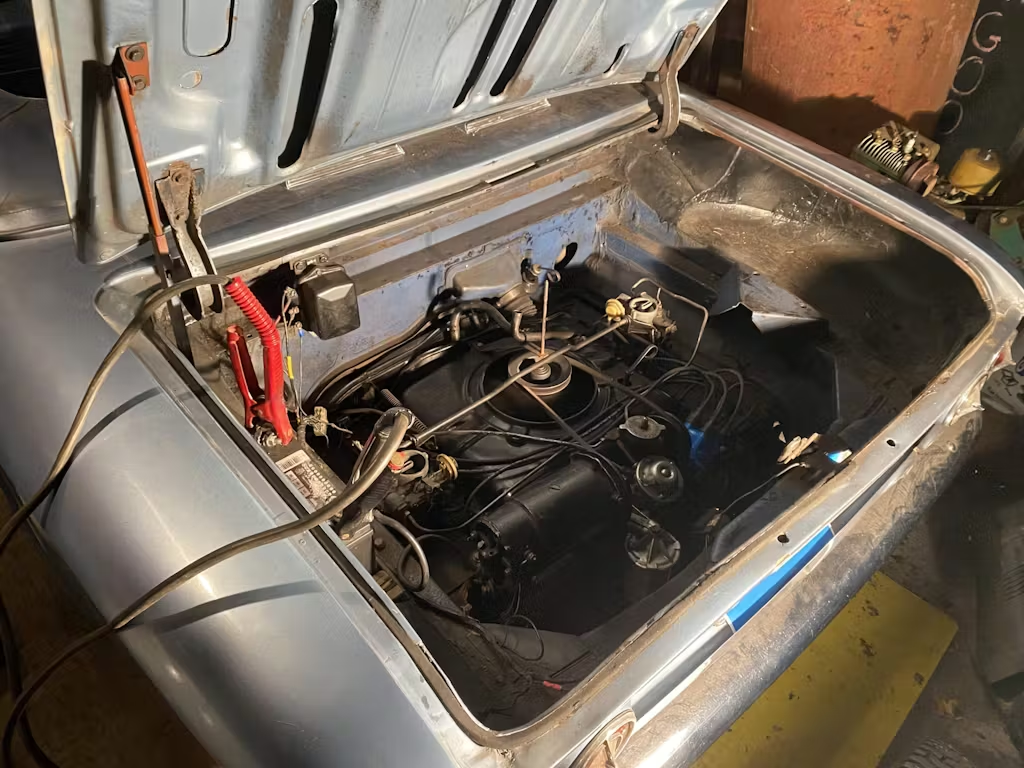
When I met the car, I did some quick checks. The firing order was correct, and the distributor cap showed no carbon tracking or signs of arcing. Finally, my calibrated eyeballs told me that the point gap was correct, or at least close enough. Shotgunned replacement of parts is not what mechanics do, but I was about to engage in informed parts replacement. There’s a difference.
Ignition condensers have really gone downhill since production went overseas many moons ago. Many folks love to blame ignition points for failing, but even with a dead set of points, the condenser is often to blame. Think of the condenser as a kind of ignition-system shock absorber. (I’ll see myself out for that pun, no need to write the editor.) As the points open, the primary circuit in the coil is broken, and the coil releases a high-voltage charge for the spark plug. But that broken primary circuit still has voltage looking for a place to go, and that’s where the condenser comes into play.
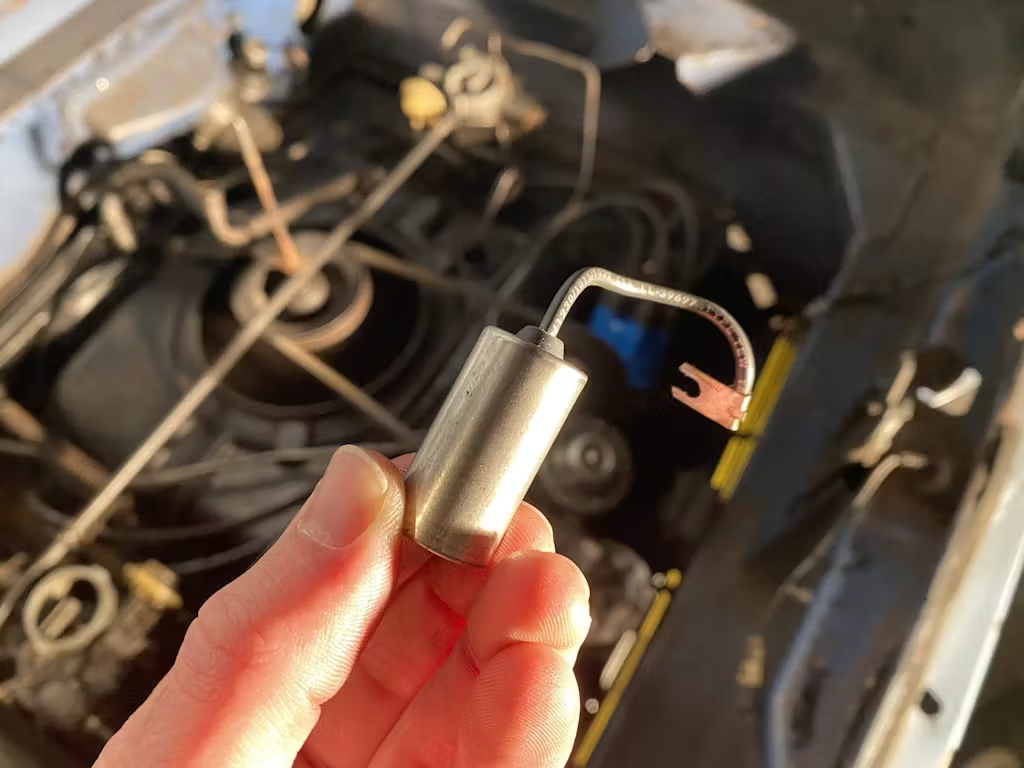
The condenser catches that current surge while the points are open. When the points close, the condenser quickly discharges. If that behavior makes a condenser sound like a capacitor, you are correct—two words for the same thing. When a condenser fails, the primary circuit jumps the point gap, putting a stop to the whole process. Making matters worse, that sudden jump of current will cause the points “face”—the metal mating surfaces that come together and then open, thousands of times per minute—to physically deteriorate, burning and pitting. An engine can run with burned and pitted points, but not always, and rarely well.
In other words, if a classic car isn’t running right, you should always check the points, but first, you should check the condenser. Neither part is expensive, and the condenser is usually the cheaper of the two. I suspected that Don’s points were good, and that his condenser had failed.

Don got lucky. My suspicions arose before I hopped into my pickup and drove out to his garage. After sifting through the “carefully organized” parts shelves in my garage, I found the distributor that had come out of my 1965 Corvair when I switched the car to a fully electronic ignition system. My Corvair ran great when I made the swap, so the parts in that distributor were what we call “known good.”
On a Corvair, the condenser is held in by one small mounting screw, and its wire lead is tied to the points with another small screw. A quick swap in the engine compartment put my who-knows-how-old condenser in place of Don’s new unit. We hooked up a battery charger and cranked the engine for a few moments, checking to ensure that the fuel pump filled the carbs. Hitting the accelerator made each carburetor shoot a quick jet of fuel into the manifold. With one more crank, the engine lit off and settled into a smooth high idle. It was a cold day, but after a few minutes, a blip of the throttle saw the idle drop slightly, indicating that the choke system was even working properly.
This episode stands as a great example of not jumping to conclusions. To say nothing of a reminder that you should hold onto select take-off parts, the stuff you’d otherwise discard, during tune-ups. Many people upgrade classic cars to electronic ignition, but if you choose to keep your points, remember to carry spares in the glovebox. Not just points—a condenser is just as important. ~KS
SFBA note: Many Corvair owners have switched over to electronic ignition for quicker starts and (ideally) less maintenance. Some owners have brags of 20 years or more running on electronic ignition. Some folks still stand by their points and condenser. There is no wrong answer. If you decide to switch over to electronic or the car you bought came with electronic ignition, consider keeping a complete points plate in the glovebox, just in case.
Have a story about an ignition upgrade or repair? Have a recommendation for how to keep that Corvair firing just right? Let us know in the comments.


Leave a Reply