
SFBA Preface: If you are new to Corvairs or new to our group, one thing you will learn is that Corvair people genuinely like to share with one another. Whether it be parts, tricks and tips or historical facts, we want you to know what we know! There is a similar ethos within the CORSA chapters as many chapters will share information between one another to publish in our respective newsletters. Al Lacki is the editor of the Lehigh Valley chapter newsletter which is always an entertaining read. Recently, Al shared a brochure and questioned some of the content within. Corvair historian (and SFBA co-founder and life member) Dave Newell stepped in to clear the air, so to speak. Below is Dave’s article printed with Dave’s permission and with full credit going to Dave, Al and the Lehigh Valley chapter. I have also included a full copy of the cited LVCC newsletter and encourage you all to take a look. It’s chock full of interesting and useful information. ~ Josh Deitcher
Preface: In the October 2021 issue of “The Fifth Wheel”, your editor included a picture of a 1961 Corvair sales brochure introducing a new type of heater with a real heat exchanger that would prevent engine fumes from ever reaching the passenger compartment.
According to the brochure, “The engine heat is utilized by an air heat exchanger to efficiently warm incoming outside air. The heated air is distributed through four rectangular air outlet nozzles in the passenger compartment. The heat exchanger core is filled with thin copper fins to effect a continuous heat transfer path.”
What??? Did Chevrolet actually have plans to include a real heat exchanger – with thin copper fins, no less – in what later became known as the “Direct Air Heater”?
Well here, in the following article, we have the definitive answer – An article by renown Chevrolet historian David Newell. ~Al Lacki
****
The optional 1961 Corvair “Direct Air” hot air perimeter heating system was designed in Chevrolet Engineering as a crash program to replace the 1960 gasoline-fired heater option in Corvair cars. The gas heater had to go, but was kept alive one more year for Corvair cars as a 1961 dealer installed accessory.
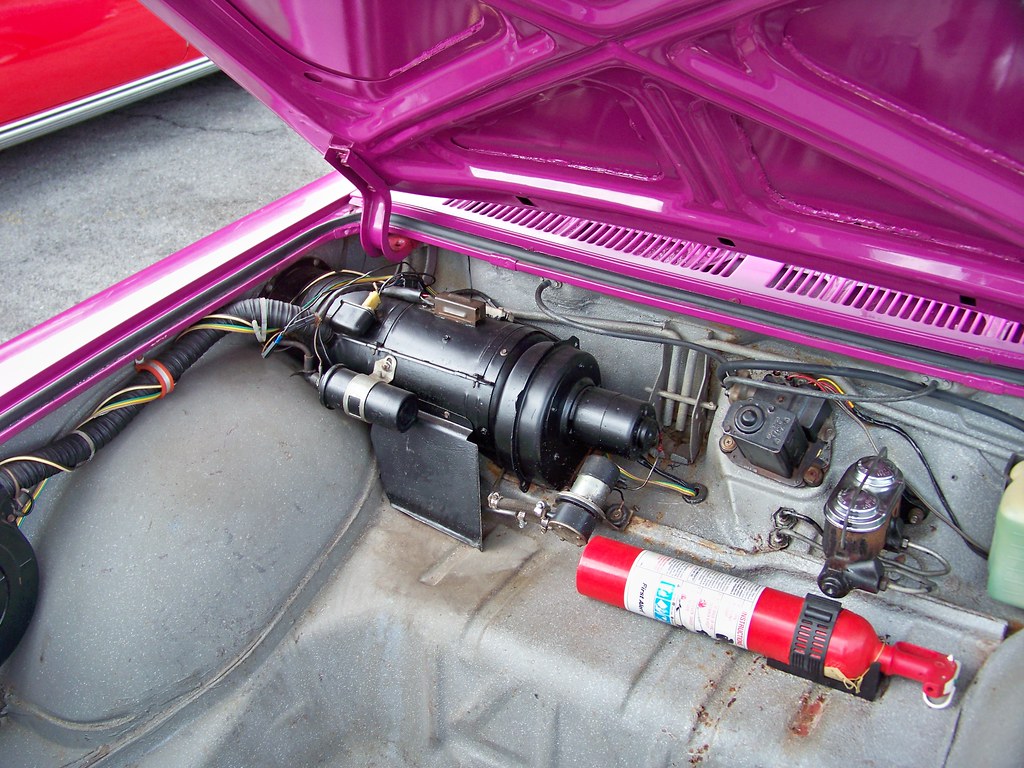
Designed jointly by Southwind and GM’s Harrison Radiator Division, the gas heater could cut Corvair fuel economy by 5 mpg in constant operation. The heater worked well after initial bugs were fixed and produced almost instant heat, but lingering gasoline fumes continued to cause explosions in the trunk. Already challenged with defending their Corvair fuel economy advertising claims, Chevy’s Sales Dept. was screaming for a different heating solution.
Thus, Chevrolet General Manager Ed Cole set up a Saturday emergency meeting at his home. Together with a few top engineers from Fisher Body, Harrison and from Chevrolet’s HVAC and body design groups, Ed directed the air heater design on that day.
The drawings done at the meeting showed hot air from the bottom of the engine routed up to the heater box where it passed through a copper finned Harrison heat exchanger. The exchanger in turn released the heat into fresh air destined to be blown into the car’s interior via ducts below the rear seat and through hoses inside the body’s rocker panels. The volume of the air flow and its temperature could be independently regulated by the driver via air valves or shut off completely.
This new system wouldn’t have been possible if the Corvair’s body design hadn’t allowed space for hoses in the rocker areas. Nor could it have worked if Chevy engineers hadn’t already designed the engine’s new-for-1961 damper door arrangement which controlled cooling air flow at its exit. These factors were indeed design serendipity amid chaos!
The new air heater had the same problem in Corvair test cars as VW had with its own heat exchanger design: very anemic heat output. The upcoming ’61 Lakewoods and FCs would have been four wheeled Frigidaires in Buffalo winters. So Ed Cole ordered the removal of the heat exchanger despite warnings from some of his engineers about potential carbon monoxide entrance into the car’s interior.
With the heat exchanger, the heater blower had to be located in the engine compartment on the firewall. Without it there was room for the blower to be mounted below the heater box itself, which now served as a mixing chamber for combining temperate engine compartment air and hot lower engine air. The temperate air was then given a boost up to the heater box by the engine’s fan via a hole in the front of the top shroud and then through a short hose and duct.
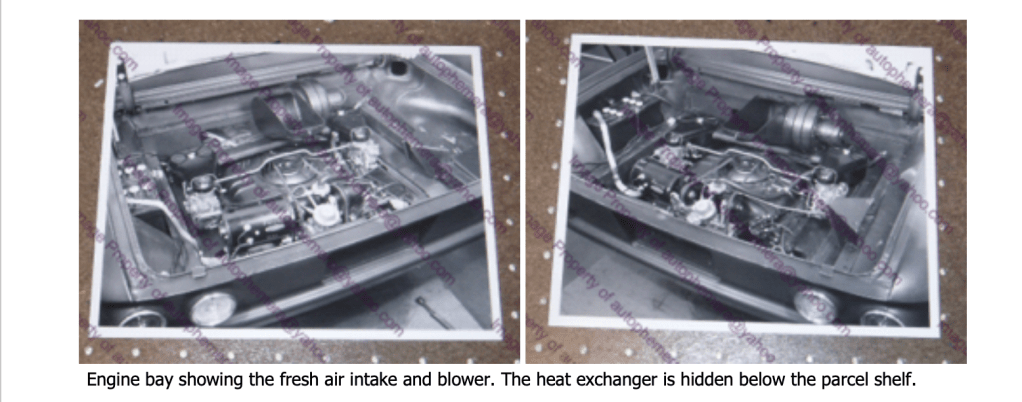
The Corvair Direct Air Heater story had yet another twist. The hurried design of the heater and the ultra-late removal of its heat exchanger caused unrevised text to slip by and be published in the 1961 Corvair car consumer accessory brochure and in the ’61 Chevy dealer accessory album.
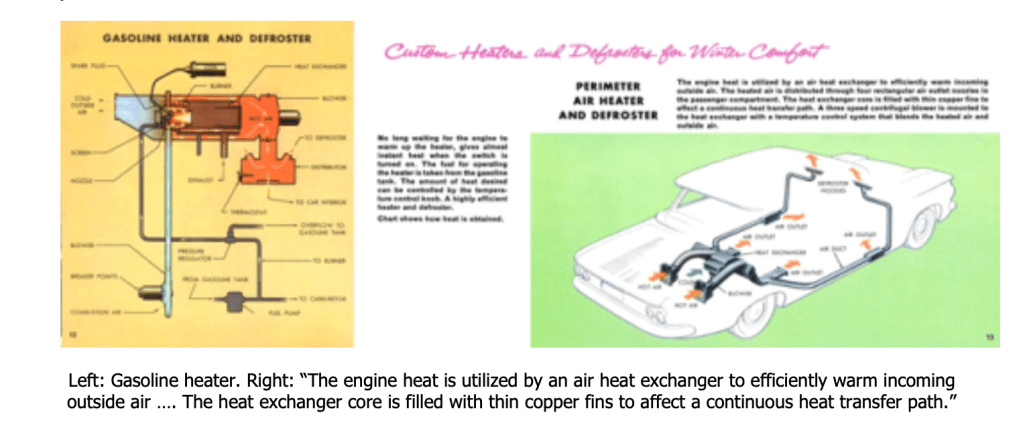
The air heater text in both of those publications merrily describes the operation of the HEAT EXCHANGER including its hundreds of copper fins! The embellished illustration of the heater’s layout is correct for the production heater but one of the added callouts points to the air mixing chamber and dubs it the “Heat Exchanger”.

Neither 1961 publication was ever revised, but the 1962 editions have properly corrected text which doesn’t mention a heat exchanger. The callout, though, stayed the same. None of this really mattered because the air heater was made standard equipment on all 1962 Corvair cars at the last minute. That move killed the air and gas heaters as dealer installed accessories for cars. Both heaters remained available as either factory or dealer installed for FCs through 1965 as they had been in 1961.


 SFBA CORSA
Leave a comment