
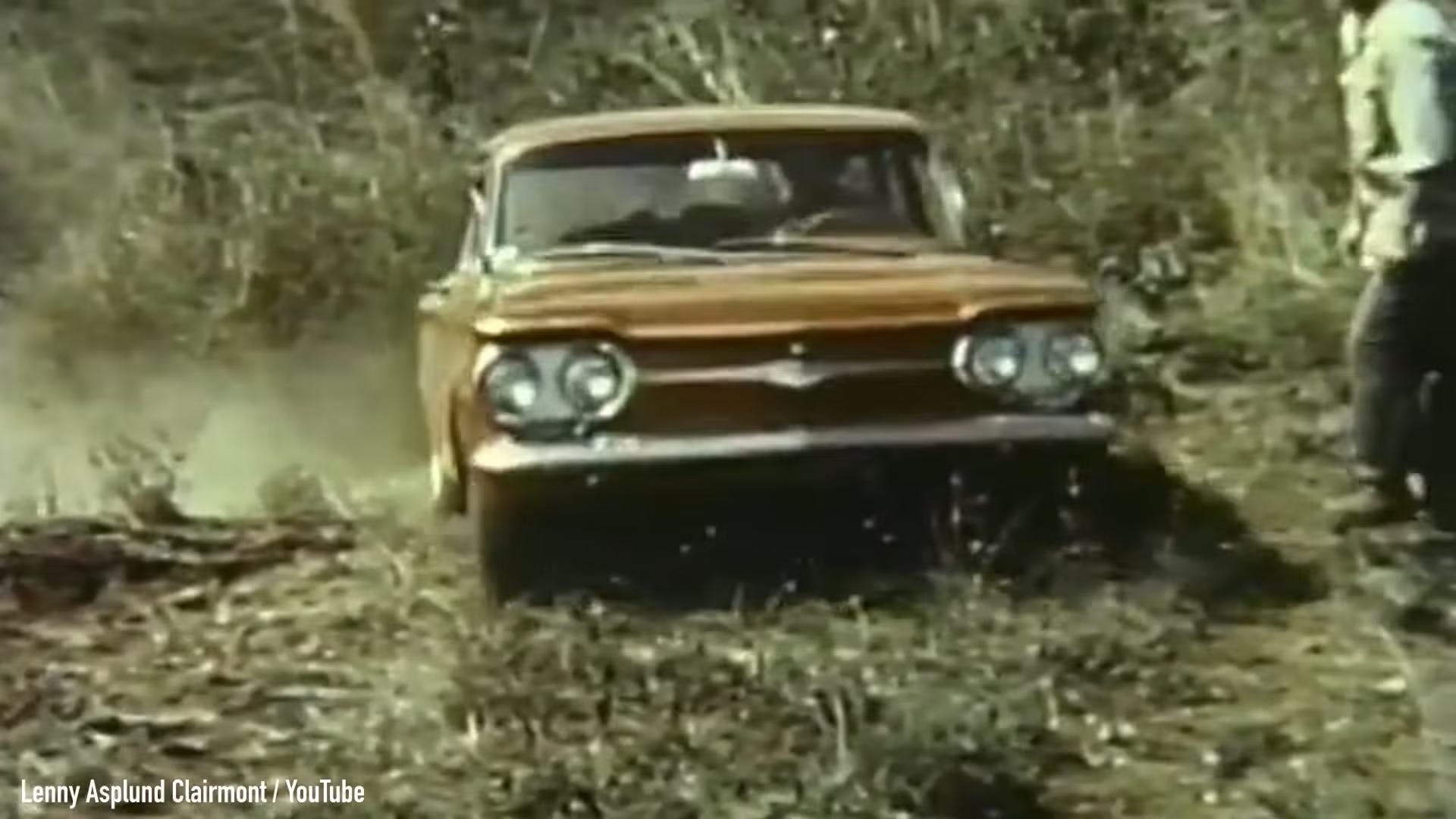
Next time some blowhard at a car show tells you what a Corvair “can’t” do or how “dangerous” they are, you can let them know that not one, but TWO Corvairs survived a crossing of the Darien Gap. The third Corvair remains there to this day.
First, a very brief primer on the Darien Gap if you are just learning of this stretch of land.
The Darien Gap is a remote, roadless stretch of dense rainforest and mountains situated on the border between Panama and Colombia. Spanning approximately 60 miles, it’s the only land bridge connecting Central and South America. To this day, the Darien Gap is considered to be one of the most dangerous migration routes in the world.
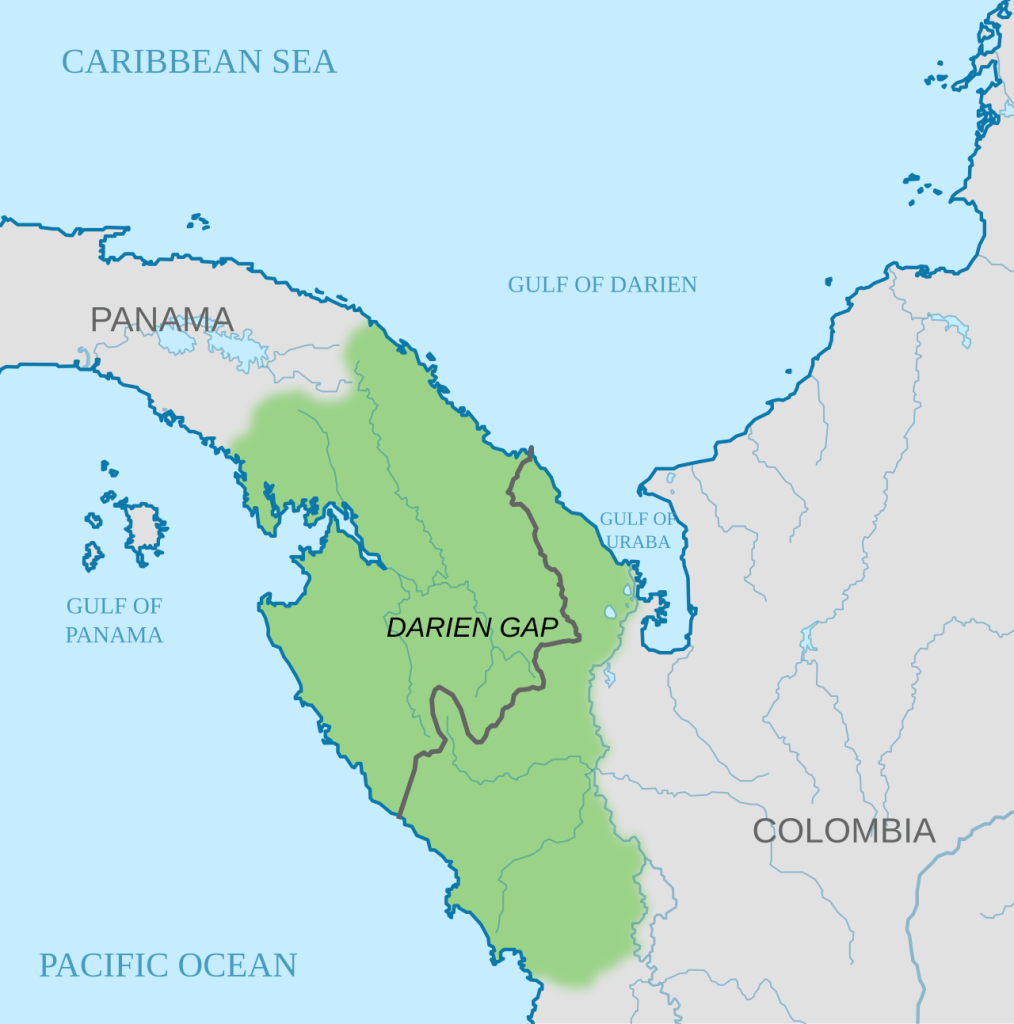
The Darien Gap features a diverse and challenging geography including mountains, dense rainforest, and swamps. The region is known for its remoteness, difficult terrain, and extreme environment.
There an are three truly great, distance-spanning routes on Earth. The Trans Siberian Railway, traversable by train, the Silk Road, traversable by camel, and the Pan American Highway which, at approximately 30,000 miles, considered the longest “motorable roadway” on Earth.
The road terrain consists of grave, concrete and dirt. In one place, it’s nonexistent due to a 57 mile stretch of swampy, dense jungle that forms the border between Colombia and Panama, the Darien Gap.
In 1960, Chevrolet was anxious to prove that its new compact Corvair which, with its air cooled, rear mounted engine, was a radical departure from the cars the brand traditionally sold to middle America. This Car was Revolutionary and they were going to prove it!
Chevrolet, in order to make a promotional film, sent three Corvairs to Alaska, and set them to the southern end of the Northern half of the Pan American Highway. The cars performed well and they, along with their team of support vehicles, reached the Northern end of the Darien Gap in Panama without trouble. At the end of the trip, they turned around and came home.
The next year, Chevrolet decided that the remainder of the trip would make for even better promotion, so they sent the same three cars, and a group of 12 men to navigate and chronicle the trip, back to Panama. The cars were filmed around Panama City prior to beginning the passage and before embarking on the gravel road to the Yaviza river. After transport across the river on wooden boats, the Corvairs were officially in the rainforest.

The adventurers cut their way through the thick growth of the rainforest with machetes, driving the cars through the gaps wherever possible or pulling them through with ropes, muscle and winches when they could not move forward on their own. When the cars broke down, the men repaired them. When a river presented an obstacle, a bridge was built for the Corvairs to cross.
It took months, but eventually the men and two of the Corvairs emerged from the other end of the gap. With the worst behind them, two Corvairs and their crew made it to Buenos Aires, Argentina, triumphant. With the trip completed, the adventurers packed up their cameras and left the cars there. It remains unknown what came of those two heroic little Corvairs.
While the two Corvairs that finished the trip disappeared into history, the other Corvair remains to this day rotting away in the jungle of the Darien Gap near a place called the Palo de Letras, the “Tree of Letters”.

And the result of this whole crazy adventure? Nothing more than the promotional films, a series of articles in the Chicago Tribune, a piece in Automobile Quarterly and a proud story shared within the Corvair community.

We would like to acknowledge the following articles and video for citation and sourcing for this read. All worthy of your time if you want to learn more!
https://www.jalopnik.com/why-theres-a-chevy-corvair-abandoned-deep-in-the-jungle-1847027807/
 SFBA CORSA
Leave a comment