
Excerpt from The Classic Corvair by Bob Helt
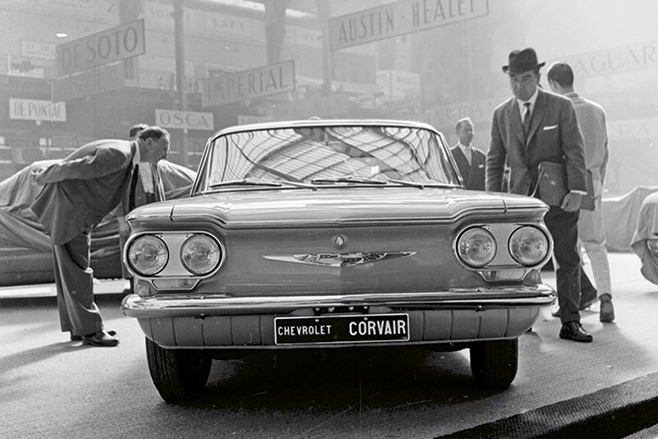
Excitement was at a fever pitch that Friday, October 2, 1959 when the Corvair was first unveiled to the anxious American public.
The waiting had finally ended.
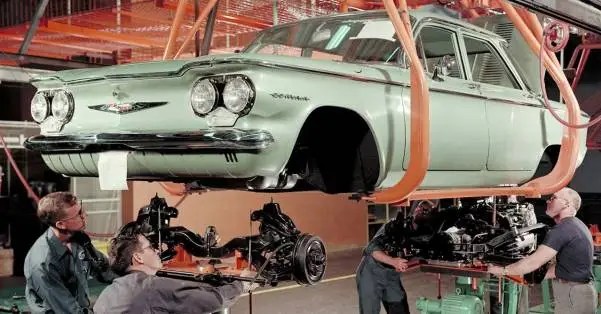
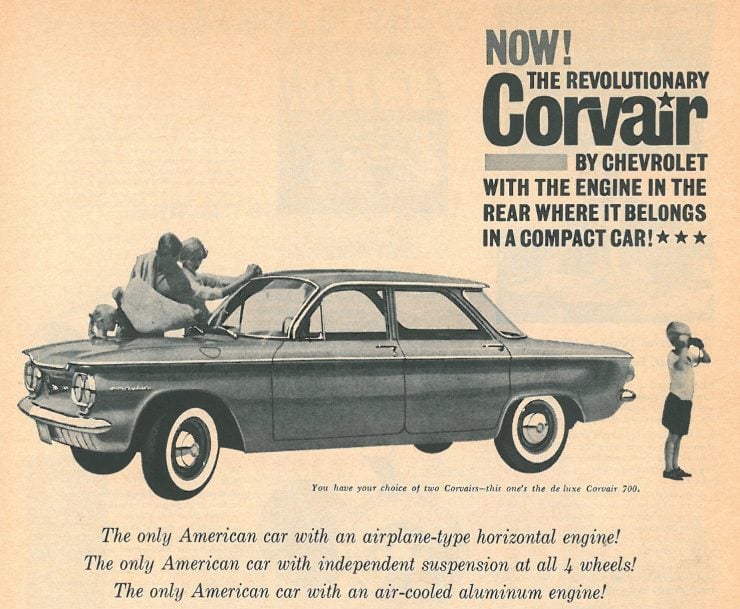
For nearly two long years we had heard about this new American wonder, the revolutionary Corvair. And here it was, with a rear mounted air-cooled, aluminum, horizontally opposed six cylinder engine; four-wheel independent suspension; and unibody construction having modular sub-frames for the front and rear suspension. This was the first domestically produced frame-integral production body produced by General Motors. Some 6,450 individual spot welds were used to build the box-like body structure.
It would be all things to Chevrolet. It would stem the tide of foreign imports and not steal sales from the rest of the production line. And there was a certain awe concerning these revolutionary features. The ubiquitous VW Beetle was a well accepted trendsetter on the American scene. And the expensive and much admired German Porsche also had a rear-mounted engine and was air-cooled.
The Corvair was an economy car with Porsche aspirations. A “poor man’s Porsche”, it was called. And it was cute! The four-door sedan was the first produced, and it was extremely attractive. In the following years, many cars borrowed styling features from the Corvair.
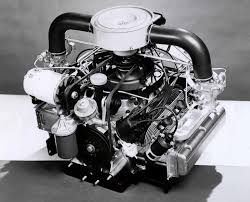
The engine was some 78 pounds heavier than originally planned. This was due to technology limitations. Early in the concept phase, it was thought that a developing technology of using aluminum for cylinder bores would be perfected in time to be used for the Corvair. The concept was to use a high silicon content aluminum, and then during the engine production operation, chemically etch some of the aluminum away from the cylinder bores. This would expose the silicon that would serve as the riding surface for the rings and aluminum pistons. This technology did not mature enough for use in the Corvair, but later was put in production for the ill-fated Chevrolet Vega, where it was successful but overshadowed by some major problems.
This turn of events caused the whole design concept of the Corvair engine to change radically. The Corvair engine was originally going to be only TWO aluminum castings instead of the five aluminum and six cast iron parts that went into production. Each of the two engine castings was to be half of the engine, split along the crankshaft, as was the final design. But each casting was to include half of the crankcase, three cylinders and the cylinder head.
It was a really neat design concept!
But, since running the pistons in aluminum bores did not work out, the engine concept had to be changed to include well-proven cast iron cylinders. This meant a separate cylinder head on each side, and the other now familiar aluminum castings. As a result, increases in engine weight came from both the cast iron cylinders (along with the steel head studs), and from the additional aluminum required to beef-up the crankcase. Without beefing-up, the crankcase was structurally weaker than it would have been in the original two-casing design. The new English developed process of low-pressure aluminum casting pioneered by the Germans was used, and proved to be quite successful.
Performance Criteria
The Corvair was designed to have the same performance as the six cylinder 1960 Chevrolet Biscayne. To meet those criteria, design targets were set for an acceleration of 0-60 mph in 20 seconds and a fuel mileage of 25 mpg at a constant 50 mph, both for a Corvair carrying a 600lb payload.
Although the engine was heavier than planned, handling was not affected substantially, and the Corvair soon attracted the Sports Car enthusiasts. With its easy steering and Sports Car like handling it was really fun to drive. Soon the idea of the Corvair as an economy car started to fade.
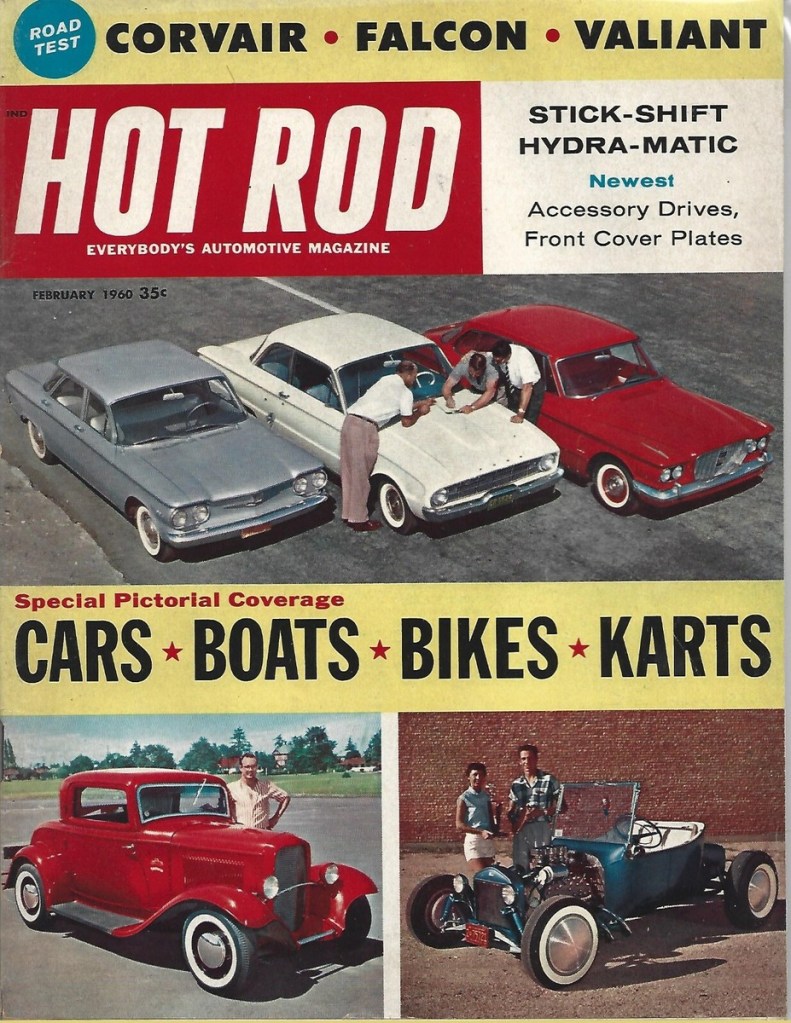
With the introduction of the Monza coupe (with bucket seats) in mid-1960, along with a slightly more powerful engine, followed by a 4-speed manual transmission with the shift lever on the floor (four on the floor) in early 1961, the Corvair’s image changed to that of a “Personal Sports Car”. Monza sales took off and the “Personal Car” stampede began. Ford soon got into the act with their Mustang in mid-model year 1964. Monza clubs sprang up everywhere, and the Corvair’s popularity continued to grow.
Comparison With The Ford Falcon
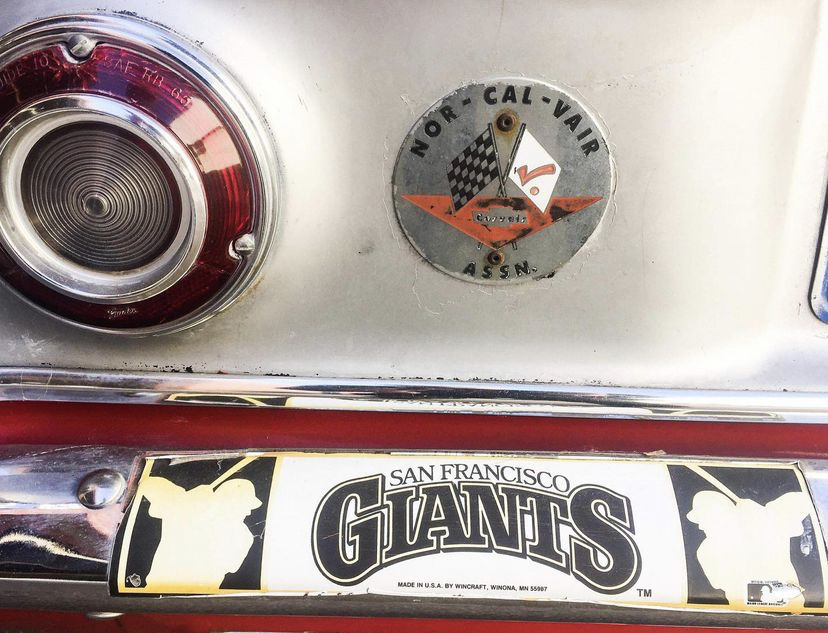
Introduced at the same time as the Corvair was the Ford Falcon that was intended to be a direct competitor, as well as an import fighter for Ford. Both cars were approximately the same size and both were initially produced only as 4 door sedans. The Corvair weighed 2315lbs. compared to the Falcon’s 2365lbs. The Corvair engine was 140 cubic inches displacement and 80 horsepower compared to the 144.3 cubic inch and 90 horsepower for the Falcon. The Falcon was designed to accelerate from 0-60mph in 18 seconds (20 seconds for the Corvair, but with a 600lb payload) and reach a top speed of 82 mph, while achieving 23mpg at 60mph (25mpg at 50mph for the Corvair). All of these criteria were very similar for both cars. And, in practice, the Corvair easily matched the Falcon’s performance. Both cars came with a three-speed manual transmission or an optional two-speed automatic transmission in 1960.
Actual Corvair Performance
To understand the Corvair performance data there are several things to keep in mind.
First, that there have been some 40 years (at the time of this writing) of engine development and improvements in powertrains, chassis, light-weight materials, and suspensions, since the Corvair was designed. At the time of the introduction of the Corvair on 2 October 1959, an acceleration from dead stop to a speed of 60 miles per hour in 10 seconds was considered to be really quick.Few cars could achieve accelerations like this. Also, remember that the Corvair was designed as an economy car. Sure, the focus changed as time went on, but inherent limitations still persisted in keeping the performance below potential.
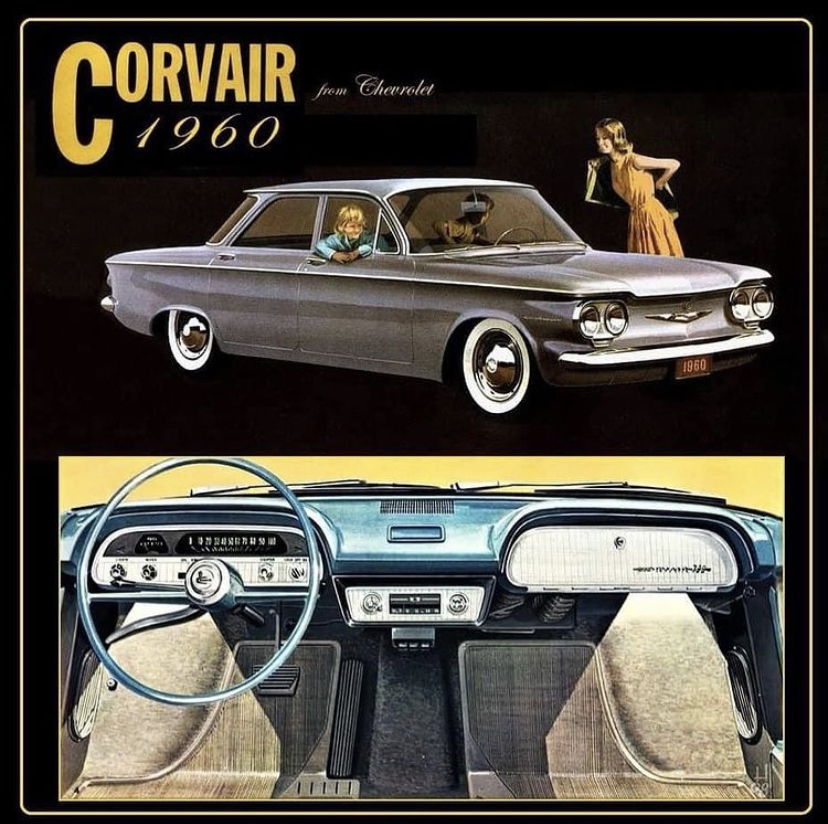
Listed below are some of the 0-60mph times measured by various car magazines to provide a snapshot of Corvair performance.
| Car | Year | Engine | Trans | Diff | Source | 0-60 Time (Sec.) |
| 4 door | 1960 | 80hp | 3-spd | 3.55 | Road & Track | 19.5 |
| Greenbrier Van | 1961 | 80hp | PG | 3.89 | —- | 32.2 |
| Coupe | 1962 | 84hp | PG | 3.55 | Road & Track | 21.6 |
| Coupe | 1962 | 150hp (turbo) | 4-spd | 3.55 | Road & Track | 10.8 |
| Convertible | 1964 | 110hp | 4-spd | 3.27 | Car Life | 14.0 |
| Corsa Coupe | 1965 | 140hp | 4-spd | 3.55 | ——- | 12.1 |
| Corsa Coupe | 1965 | 180hp (turbo) | 4-spd | 3.55 | Car & Driver | 10.2 |
To pick up your own copy of Bob Helt’s “The Classic Corvair” (we highly recommend it), click HERE

 SFBA CORSA
Leave a comment